

How to clean your garden furniture?
of reading

It's the season for aperitifs in the garden! But before serving drinks, make sure your guests are pampered by clean outdoor furniture.
Or on the contrary, it's the season where everything happens indoors and we prefer a good raclette rather than sticking a toe outside.
This article presents the best practices for keeping your garden furniture looking new, both in summer and off-season.
Five main types of garden furniture will be discussed in this article:
- Wood
- Plastic
- Metal
- Fabrics
- Wicker

PREPARATION
The tools and products you will need:
- Dish soap
- Basin (for mixing dish soap and water)
- Soft brush
- Oxygen bleach (can be replaced by chlorine bleach, but is not safe for fabrics)
- Medium-grit sandpaper
- Garden hose
- Dry towel

1) Cleaning wooden garden furniture
Step 1: Scrub and wash
Mix dish soap and hot water in a small basin.
Wet your outdoor furniture and apply the solution to the surface.
Scrub away dirt and mildew with a soft brush.
Cautionary tip: Be sure to distinguish hardwoods (like teak and oak) from softwoods (like cedar and pine). While hardwoods are quite resistant to scratches, softwoods should be scrubbed with the grain using a soft brush or pad. If necessary, you can use a wire brush for stubborn stains, but be careful, as this may strip the wood fibers.
Finally, rinse off the cleaning solution and dirt with a garden hose.
Step 2: More stubborn stains
Mix bleach, dish soap, and water in a basin.
Test the solution on a small area to check for any reactions.
If there are no side effects, let the mixture sit on the surface for about 15 minutes, long enough for it to foam and react with the dirt.
Scrub away any remaining dirt with a soft brush.
Remove the cleaning solution and residue with a hose.
Step 3: Drying
Step 4: Polishing
As moisture can accentuate wood grain, gently sand your patio furniture with the grain using medium-grit sandpaper. Wipe off any residue.
Step 5: Finishing touches
Apply wood stain to your wooden furniture.
Softwoods, in particular, will benefit from a stain that blocks UV rays, which break down wood fibers.

2) Cleaning plastic patio furniture
Step 1: Scrub and wash
This step involves thoroughly cleaning your furniture to remove most of the dirt and stains.
Mix dish soap and hot water in a small basin (dish soap to water ratio: 1:4).
Wet your outdoor furniture and apply the solution to the surface.
Scrub away dirt and mildew with a soft brush.
Finally, rinse off the cleaning solution and dirt with a garden hose.
Step 2: More stubborn stains
If stubborn dirt and mildew stains remain:
Mix bleach, dish soap, and water in a basin.
Test the solution on a small area to check for any reactions.
If there are no side effects, let the mixture sit on the surface for about 15 minutes, long enough for it to foam and react with the dirt.
Scrub away any remaining dirt with a soft brush.
Remove the cleaning solution and residue with a hose.
Step 3: Drying
Pat the furniture dry, then let it dry in sunlight.
Step 4: Polishing
The finish of a plastic surface may appear dull after cleaning; gently sand it with medium-grit sandpaper. Wipe off any residue.
Step 5: Final maintenance touches
To restore shine to plastic surfaces:
Apply a coat of standard water-based paint to stubborn stains.
Apply a tiny amount of paste wax to a dry cloth and use circular motions to polish the surface. This will help to repel dirt and stains.

3) Cleaning metal garden furniture
Step 1: Scrub and wash
This step involves thoroughly cleaning your furniture to remove most of the dirt and stains.
Mix dish soap and hot water in a small basin (dish soap to water ratio: 1:4).
Wet your garden furniture and apply the solution to the surface.
Scrub away dirt and mildew with a soft brush.
Finally, rinse off the cleaning solution and dirt with a garden hose.
Step 2: More stubborn stains
If stubborn dirt and mildew stains remain:
Mix bleach, dish soap, and water in a basin.
Test the solution on a small area to check for any reactions.
If there are no side effects, let the mixture sit on the surface for about 15 minutes, long enough for it to foam and react with the dirt.
Scrub away any remaining dirt with a soft brush.
Remove the cleaning solution and residue with a hose.
Step 3: Drying
Step 4: Polishing

4) Cleaning outdoor fabric furniture
If a manufacturer's label is attached: Simply follow it! For any remaining mold stains, check the label to see if the fabric is bleach-compatible.
If there is no manufacturer's label:
Brush off excess dirt. You can also vacuum cushions on a low setting.
Mix dish soap and hot water in a small basin (dish soap to water ratio 1:4).
Wet your outdoor furniture and apply the solution to the surface.
Gently scrub away dirt and mildew with a soft brush.
Finally, rinse off the cleaning solution and dirt with a garden hose.
You can also put removable fabrics in the washing machine, but do not machine dry them.
For more stubborn stains, apply the following methods:
Mix oxygen bleach, dish soap, and water in a basin.
Test the solution on a small area to check for any reactions.
If there are no side effects, let the mixture sit on the surface for about 15 minutes, long enough for it to foam and react with the dirt.
Scrub away any remaining dirt with a soft brush.
Remove the cleaning solution and residue with a hose.

5) Cleaning wicker garden furniture
Step 1: Scrub and wash
This step involves thoroughly cleaning your furniture to remove most of the dirt and stains.
Mix dish soap and hot water in a small basin (dish soap to water ratio 1:4).
Apply the solution to a soft cloth and wipe the wicker.
Finally, rinse off the cleaning solution and dirt with a garden hose.
Step 2: More stubborn stains
For problematic stains:
Gently scrub the wicker with a soft brush and the warm soapy water mixture from Step 1. Remove the cleaning solution and dirt with a garden hose.
To remove mold stains, prepare a solution of 1:4 diluted vinegar in water. Wipe the furniture with this solution, then rinse off the cleaning solution and dirt with a garden hose.
You can also use a handheld steam cleaner if your furniture is very dirty. Be sure to follow up with thorough blow-drying so as not to deform the wicker fabric. For best results, perform this procedure when it is sunny or windy outside, so that drying is faster.
Step 3: Drying
Place the furniture in sunlight and let it dry. You can use a hairdryer for faster results.

ADDITIONAL MAINTENANCE TIPS FOR ALL SURFACES
Follow these tips to better maintain your garden furniture in the long term:
- Store cushions indoors when not in use.
- Do not wrap cushions in plastic, as this may trap moisture and cause mold stains.
- Regardless of the surface, clean your furniture regularly to improve its longevity.
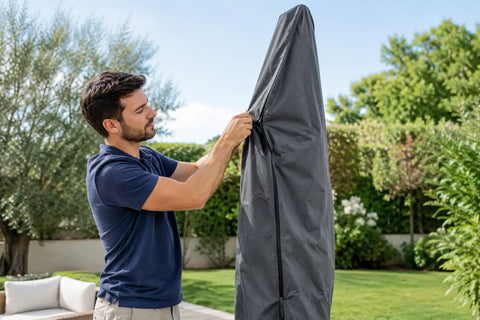
- Invest in outdoor garden furniture covers to prevent exposure to dust particles, UV rays, and moisture. This will lighten your cleaning process and provide optimal protection for your outdoor space.