

How to protect your patio cushions
of reading
A patio cushion can lose its color in one summer, retain moisture after a storm, and end up stained after a few outdoor meals. Knowing how to protect patio cushions helps avoid frequent replacements, while keeping your patio inviting and comfortable. The right solution isn't just about bringing them in as soon as it rains: it relies on a suitable cover, regular maintenance, and storage designed for your climate.
Protecting patio cushions from real risks
Outdoor cushions are exposed to several aggressions simultaneously. The sun is often the primary cause of faded colors, especially in American regions where summer days are long and very bright. UV rays also weaken certain fibers and can make the fabric less flexible over the seasons.
Rain and humidity create another problem. Even a cushion advertised as water-resistant can absorb moisture through seams, zippers, or internal foam. If it remains damp, it can emit an unpleasant odor, develop mold stains, or take several days to dry completely.
You also have to contend with barbecue stains, drinks, pollen, dust, animal marks, and dirt brought by the wind. An outdoor chair or patio sofa cushion is made to be used, not kept under a bell jar. The goal is therefore to protect it without complicating your daily life.
How to protect patio cushions daily
The best habit is simple: do not leave cushions unnecessarily exposed. When heavy rain, windy conditions, or several days of non-use are forecast, store them or cover them. This small reflex genuinely extends their lifespan.
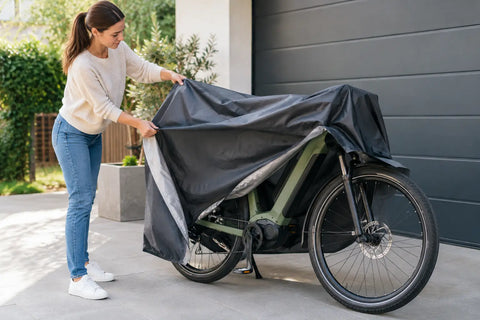
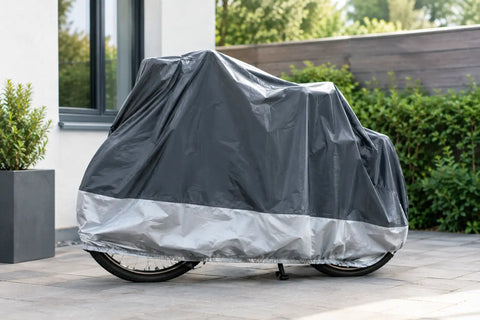
A garden furniture protective cover is particularly practical when cushions remain on the seats. It covers the entire garden lounge, limits dust accumulation, and prevents water from directly seeping into the fabrics. Choose a cover large enough to drape over the sides, but not too loose: a cover that flaps in the wind can wear out faster and let rain through.
For independent cushions, a dedicated storage bag is often more effective. It allows you to group them, easily move them to the garage, dry basement, shed, or an outdoor storage box. Handles are useful if you need to bring them in frequently after a day on the patio.
Waterproof or breathable: the right balance
A completely waterproof cover seems ideal, but it's not always the best choice. If moisture is already present in the cushions when stored, a non-breathable cover can trap it. This is a favorable environment for odors and mold.
Opt for a water-repellent or water-resistant cover with a breathable material. It protects against showers and dust while limiting condensation. In very humid areas, such as some coastal regions or the Southeastern United States, this criterion is even more important.Before closing a cover or storage bag, always check that the cushions are perfectly dry. After a downpour, open the zippers, place them on their edge, and allow air to circulate. A few hours of drying can prevent several weeks of ingrained odor.
Choosing a cover suitable for your outdoor furniture
A good cover protects better when it matches the actual dimensions of your setup. Measure the width, depth, and height of your outdoor sofa, armchairs, or chairs with cushions. Add a small margin so you don't have to pull on the fabric every time you install it.
For a dining set, a large table and chair cover may be the quickest solution. For a modular patio sofa, it's sometimes better to cover each module separately, especially if you use the patio regularly. You can then uncover only the necessary seats, without handling an overly heavy cover.
Also look at the practical details: drawstrings, tie-down straps, elasticated hems, and fastening buckles. These elements prevent the cover from flying off during a storm or a very windy day. A ventilation opening can also be useful to reduce condensation under the cover.
At 1001 Housses, the idea is to find a cover designed for a specific use rather than approximate protection. A well-fitting cover is easier to install, more pleasant to use, and more effective season after season.
Clean quickly to prevent stains from setting in
Protection also begins with prompt cleaning. A fresh stain from sauce, sunscreen, or a drink is much easier to remove than a dry mark. Blot with a clean cloth, a little lukewarm water, and mild soap. Avoid scrubbing too hard: you risk spreading the stain or damaging the fabric surface.
For routine maintenance, shake cushions once a week and gently brush off crumbs, leaves, and dust. If cushion covers are removable, check their label before washing. Some can be machine-washed on a delicate cycle, while others require hand washing or simple spot cleaning.
Do not use bleach on colored fabrics, unless explicitly stated by the manufacturer. It can lighten the fabric unevenly and weaken the fibers. An overly aggressive stain remover is rarely necessary for regular maintenance.
Dealing with mold
Small black or gray spots should not be ignored. Remove cushions from the patio, brush them outdoors, and clean the surface with a mild, textile-appropriate solution. Then let them dry completely in the sun, without leaving them exposed too long if the color is fragile.
If the inner foam is very damp, smells bad, or has deep marks, cleaning the cover alone may not always be enough. In this case, it may be necessary to replace the filling or the cushion. A protective cover remains a much more reasonable investment than completely replacing garden furniture.
Storing cushions during winter or long absences
During winter, or before a prolonged departure, do not leave your cushions in a poorly ventilated outdoor storage box. Even if the box seems waterproof, temperature fluctuations can produce condensation. A dry garage, a spacious closet, or an indoor storage room is preferable.
Store cushions clean and completely dry. Do not compress them excessively: foam crushed for several months may not regain its shape as easily. If you stack them, place the largest and firmest ones at the bottom, then avoid placing heavy objects on top.
In regions with mild winters, you can leave furniture outdoors under a sturdy garden cover, provided you regularly check the condition of the protection. After a storm, remove accumulated leaves and water from the top. A heavy water pocket can deform the cover and exert unnecessary pressure on the cushions.
Mistakes that shorten cushion life
The first mistake is covering wet cushions. The second is believing that a fabric treated for outdoor use requires no maintenance. Resistant does not mean invulnerable: sun, greasy stains, and prolonged humidity always end up leaving a mark.
Also avoid leaving a protective cover on the ground, dragging in a puddle or against a muddy area. When it is put back in place, it will transfer dirt and moisture to the furniture. Finally, do not store cushions in a sealed plastic bag for several weeks. It protects from dust, but it also blocks air.
A well-maintained patio does not require great effort every day. A suitable cover, a few minutes of drying after rain, and clean storage before the bad season are often enough to keep your cushions comfortable, tidy, and ready for sunny days.