

How to protect and maintain your motorcycle during winter?
of reading

Winter is probably the least favorite season for all drivers, whether of 4-wheel or 2-wheel vehicles. Indeed, no biker would want to ride in the middle of winter. Why? Simply because the extreme cold can severely impact their machine.
On the contrary, during the winter season, it's ideal to winterize it and maintain it to welcome the warmer days. It's also the most difficult period to ride a 2-wheeler. You too, store your motorcycle and follow the few tips below.
1- Cleaning your motorcycle:
The first obvious step to maintain and protect your motorcycle during winter is to clean it well before winter sets in. A complete wash is enough to ensure your motorcycle is in good condition during winter. This helps you get rid of residues, dirt, and various deposits that can form on your motorcycle's parts and damage the paint and varnish layer. It can even rust the metal elements of your motorcycle.
And it's not just metal elements that can deteriorate with dirt. Plastic and rubber parts should also be taken into account. They must also be thoroughly washed so that they don't tarnish after winter. And if your motorcycle has traveled through a snowy street, you must remove salt deposits from your motorcycle.
And when you're done washing everything thoroughly, then apply specific maintenance products to be purchased in specialized shops or stores for this purpose. Apply them to chrome and painted parts and to rubber, metal, and plastic elements. Here's how:
- First, apply a thin layer of special car wax to the paint to protect it from the ravages of time;
- Second, apply a layer of polishing product to plastic and rubber elements;
- Third, spread a thin layer of oil or silicone spray on metal and chrome parts to protect them from rust.

But you also need to apply maintenance products to the chain, which will be exposed to the open air, to lubricate it. You can use either gasoline or kerosene. To do this, immerse the drive chain in oil. Then, brush it to remove residues, and continue by applying a new layer of grease or chain lubricant. Note that lubrication should only be done after washing.
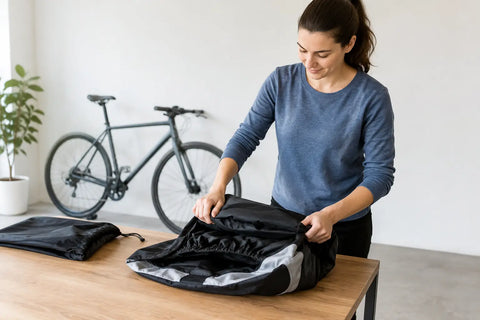
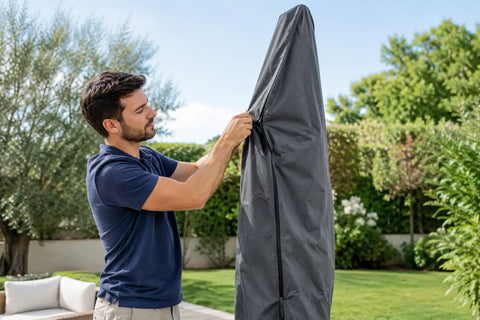
And when you're all done, you can cover your vehicle with a motorcycle cover while waiting for the next days to protect its engine and 2 wheels from the harsh winter cold. The fabric must also be breathable to prevent condensation.
2- Finding a good location for your motorcycle:
To be able to protect your motorcycle, simply not riding it is not enough. You also need to find a good location for it to be safer, as winter will last several months. Ideally, park it in a dry and covered place to protect it not only from the cold, but also from wind, snow, and rain.
Whenever possible, opt for enclosed places such as a garage, a box, a covered parking lot, and other secure and covered locations to protect your motorcycle not only from hazards, but also from malicious individuals.
3- Removing the battery:
After finding a good location for your motorcycle, make sure to remove the battery and place it in a cooler and drier place if you want to maintain its condition. Also, be sure to charge it according to its capacity to avoid overheating. For example, if your motorcycle's battery has a capacity of 16 Ah, you should charge it until it reaches a rate of 1.6 A.
But it is also more convenient to equip yourself with a charger with a charging kit that will allow you to automatically charge your battery without having to disassemble it and check the charge level each time. There is no risk of it being permanently connected with this type of charger.
This is also very important: first disconnect the negative terminal, then the positive. When connecting, it will be the opposite, first connect the positive terminal, then the negative. Then clean the battery with a dry cloth or brush and coat the terminals and lugs with contact grease if you have any. Then, store your battery in a dry place, away from frost and sun.
4- Filling up the gas tank or draining it:
You might be wondering why you need to fill up the gas tank when your motorcycle is going into winter storage. Well, because this action helps limit the formation of humidity that leads to rust in your tank. When you fill it, and ideally add an inhibitor, you will be able to prevent corrosion. Once you have filled your gas tank, run the engine for a few minutes before turning it off to stabilize the gasoline. If your motorcycle is equipped with a fuel injection engine, after filling the tank, use a stabilizer to prevent the degradation of the gasoline, which will then cause humidity.

But beware, filling the gas tank does not apply to carbureted motorcycles. On the contrary, for these, the tank must be emptied. Instead of pouring gasoline into it, it is safer to lubricate it and pour an anti-corrosion product into it. Also drain the bowl of your carburetor and the fuel circuit. To quickly and efficiently drain the carburetor, run the engine until it stops by itself and use the drain screw.
5- Taking care of the tires:
You should also know that the winterization of a motorcycle poses a significant risk of tire deformation. Indeed, it's quite logical. Your motorcycle's tires cannot withstand the weight of your 2-wheeled vehicle for such a long time. Therefore, to keep them in good condition, it's essential to equip them with a rear stand or a center stand.
Moreover, with this accessory, you can clean and degrease all parts of your motorcycle without any problem. If your motorcycle stand is located on the center of its tires, it is advisable to place it there or to rotate your wheels at least once a month so that the contact point with the ground changes. You also need to inflate the tires regularly.
6- Subscribing to motorcycle insurance:
Like cars, motorcycles must also be covered by insurance. This not only protects your motorcycle from thieves and accidents, but also from bad weather and winter impacts. However, since your motorcycle will stop running during winter, the insurance guarantees related to traffic will logically cease.
Therefore, subscribe to insurance for your motorcycle to maintain and protect it properly. Moreover, it is required by law that all motorized vehicles must at least be covered with third-party insurance. If you do not wish to spend more than necessary, you can consider special winter motorcycle insurance called "seasonal insurance."

7- Anodizing metal parts:
All parts that contribute to the functioning of your motorcycle, such as the rim, frame, fork, shock absorber, and kickstand, must also be protected from the winter cold. They must be anodized to increase their resistance to corrosion. For your information, anodizing consists of positioning a layer of alumina on the surface of these parts to make them stronger, but above all, more aesthetically pleasing.
This process takes place in several steps. First, you must clean your parts in a caustic soda bath. Then sand them with sandpaper to remove all traces and dirt. It is also important to wear thick gloves and protective eyewear, as anodizing is quite dangerous for your skin and health.
Then, mix demineralized water and sulfuric acid and apply this mixture to the parts to be anodized. If you have any doubts, call on an anodizing professional who can know the best techniques to proceed with this step.
8- Draining the cooling system:
It's not just the carburetor that needs to be drained when you winterize your motorcycle. If it's equipped with a cooling system or if the storage period is over 6 months, you must drain this cooling system. Also add antifreeze to avoid draining it multiple times.
Therefore, avoid using tap water, which contains mineral components that can promote radiator corrosion. Instead, prefer distilled water.

9- Draining the engine oil:
Engine oil can also contain dirt during combustion and exhaust sequences. It is essential to get rid of it, as it can also cause corrosion of certain engine parts of your motorcycle. To be able to drain the engine, it is recommended to:
- Run the engine until the operating temperature is normal;
- Turn off the engine;
- And drain immediately.
- Make a list before and a cross-check after winterization
Whatever you decide to do to protect and maintain your motorcycle during winter, it is always essential to note the changes you have made to your motorcycle before and after winterization. For this, you need a checklist. Carefully analyze this list and at the end of winter, write a counter-checklist that will list all the steps you have taken and will therefore allow you to see those you have forgotten.
And don't forget, even if your motorcycle is in a good location, it is always safer to equip it with an anti-theft system to secure it. For example, you can attach it to a fixed element and then cover it with a camouflage motorcycle cover.
10- Last resort: go to a dealership to winterize your motorcycle:
If you have the means and don't have enough time to devote to winterizing your motorcycle, you can consider consulting a dealership or your favorite garage. They will take care of your motorcycle from washing and preparing for winterization to storing it throughout the winter. And when the good weather arrives, a phone call is all it takes to pick up your motorcycle from them.
The price of winterizing a motorcycle with a specialist varies depending on the duration and the desired services.

11- What about the motorcycle helmet?
Like the motorcycle, the helmet also requires regular maintenance to ensure optimal protection for the 2-wheel rider. While approved helmets do not have a precise lifespan, it is always safer to replace them every 2 to 5 years depending on the frequency of motorcycle use and, logically, helmet use.
In any case, a helmet's longevity mainly depends on its maintenance. It must be thoroughly washed, starting with the outside, using soapy water and a sponge. Rub the dirty areas, then rinse well with clear water. Then wash the inside of your helmet by removing the interior foams. And wash them with soapy water before rinsing them thoroughly. Then, air dry your helmet before putting them back or storing them in a place protected from the sun, wind, snow, and rain. Above all, avoid drying it with a hairdryer to avoid damaging the polystyrene shell of the helmet.

But you must also remember to clean the visor. This requires special care with a specific product to avoid scratches. Use lukewarm water, a soft cloth, and dish soap. Pour a little dish soap into the lukewarm water to make it soapy. Moisten the cloth with this water and gently wash the visor. Then, rinse thoroughly before air drying it. Once the helmet is well cleaned, you can store it safely with your motorcycle under a waterproof motorcycle cover.