

How to protect your garden furniture in winter?
of reading

Take care of your garden furniture and it will last for years. Here are some tips for protecting and storing your garden furniture over the winter, so you can enjoy it summer after summer, after summer, and most importantly, keep it looking like new!
Whether you plan to store your garden furniture in a wooden or plastic shed, or leave it outdoors over the winter, cleaning it and protecting it from the elements will help it last longer and look better.
How you do this depends on the material your furniture is made from. Below are specific care instructions for all types of garden furniture.
1) How to care for wooden garden furniture
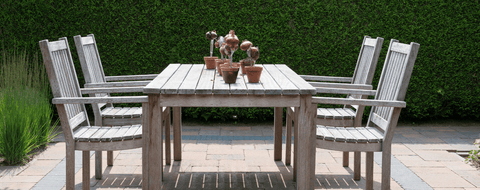
Wooden garden furniture requires the most maintenance and protection each year. Here are the simple steps to follow if you want to keep your wooden outdoor furniture in perfect condition.
A) Clean them
All wooden furniture will appreciate a good cleaning once a year to remove dirt, dust, etc.
If you leave your wooden furniture outdoors over the winter, you might think there's no point in cleaning it during the wetter months, but dirt holds extra moisture. This means dirty furniture will stay wetter all season and be more prone to rot than clean furniture, which has a chance to dry out on sunnier days.
Even if you store your wooden furniture in a shed or garage, cleaning it beforehand ensures it stays dry during storage and prevents dirt from drying into the wood.
Wash your wooden furniture with warm soapy water and a brush. Let it dry completely before lightly sanding it.
B) Treat the wood
Hardwoods - including teak, acacia, oak, and eucalyptus - do not need to be treated beyond a good cleaning. Over time, they will turn silver, but if you want to maintain their original color, a teak oil treatment once a year will do the trick.
Softwoods, such as pine, should be treated with a preservative, wood paint, or oil to protect the wood. Paint the product of your choice onto the furniture using a clean brush. Be sure to tilt the furniture to treat the underside of the legs - areas that are in contact with the ground are prime spots for moisture absorption and rot. Allow the first coat of preservative or paint to dry completely before adding a second coat.

C) Repair the furniture
Take the opportunity to check for missing or loose screws. If you need to replace any, opt for brass screws that won't rust.
2) How to care for wrought iron and steel furniture?

By thoroughly cleaning iron and steel furniture once a year, you have the opportunity to spot any rust before it becomes irreparable. Wash them with soap and water, using a brush or cloth, then rinse off the soap with clean water.
If you see rust spots, treat them now to prevent them from getting worse. Sand off the rust with steel wool or a hand sander, depending on the size of the area.
Clean the area again and fill any holes with epoxy filler. Sand again and, finally, prime and paint the metal furniture to protect it and restore its former beauty.
3) How to care for aluminum garden furniture

Although aluminum garden furniture does not rust, it still needs to be maintained during the winter. Use a soft brush to remove dirt or leaves. Then, wash off any remaining dirt and stains with warm water and soap. Rinse with clear water and apply water and vinegar with a soft cloth to polish the metal.
Do not use anything abrasive as this will damage the aluminum surface. You can finish your maintenance with a coat of car wax for extra protection.
4) How to care for plastic garden furniture

Plastic furniture is inexpensive, easy to move, and very durable. But it can quickly look shabby if not cared for. Wash your plastic garden furniture with warm water and soap or detergent, or use a pressure washer. Do not use anything abrasive to scrub your plastic furniture, as this will damage the surface.
If your white plastic furniture is stained, you can bleach it - just be sure to protect your hands with gloves.
Whatever the color of your plastic furniture, finish your cleaning with a coat of car wax to make the surface shine.
5) How to care for rattan and wicker garden furniture?

Rattan and wicker furniture should ideally be stored indoors, or at least properly covered during the winter. Never leave rattan garden furniture exposed all year round.
6) Storing your garden furniture
Now that your garden furniture is clean and dry, it's time to think about storing it for the winter. You have several options:
- Store them in a garage or shed
- Protect them with special covers
- Move them to a sheltered location
For advice on each of these solutions, read on...
A) Store garden furniture in a garage or shed

Most garden furniture will be best stored indoors over the winter. Many pieces, such as folding chairs, loungers, and folding tables, are foldable for easy storage. Others are designed to be stackable to minimize the storage space they need.
If you have space in your garage or garden shed, store clean and dry garden furniture during the wetter months. If you don't have room to store garden furniture in your current garden buildings, consider investing in a specially designed plastic storage shed for this purpose.
Iron or steel furniture should be stored indoors if possible. Similarly, barbecues and garden grills should be cleaned and stored for the winter.
Natural wicker and natural rattan furniture will not last very long if left outdoors during the wetter winter months. Fortunately, most rattan garden furniture is now made from a more practical rattan-effect plastic and can be left outdoors with adequate covers.
Cushions and other soft garden furniture should always be cleaned and stored during the winter months. Check the care instructions for each piece. Machine wash items that can be and sponge clean those that cannot. Allow cushions and covers to dry completely before storing them indoors or under a cover where mice won't find them.
All furniture and cushions stored in sheds and garages should be checked regularly to ensure they are still dry.
B) Protect outdoor furniture with garden furniture covers

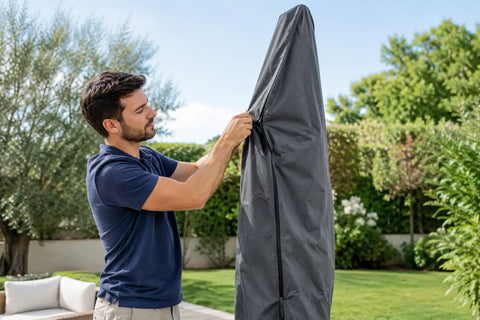
If you leave your garden furniture outdoors over the winter, you should invest in suitable covers to protect it from the elements, with different models depending on your furniture.
Plastic garden furniture, in particular, becomes brittle and deteriorates if left in direct sunlight for more than a few weeks, even during winter. Well-fitting covers can extend the life of your plastic garden furniture.
Rattan furniture also benefits from good coverage during the winter months. For example, choose a waterproof garden furniture cover to ensure the best level of moisture protection for your rattan garden furniture.
Before covering the furniture, remove all decorative elements and seat cushions. Then, make sure it is clean and dry and ensure there is adequate ventilation for air circulation. This way, if moisture gets under the cover, it can escape on dry days.
Here is the garden furniture cover catalog, with a wide range of choices and different sizes for all types of outdoor furniture!
C) Move outdoor furniture to a sheltered location

Whether you choose to keep your garden furniture covered or not over the winter, moving it to a more sheltered part of your garden will provide more protection from wind and rain.
If possible, move your garden furniture from the lawn to a flat, concrete, or paved surface to reduce exposure to soil moisture. If your wooden furniture must remain on the lawn, remember to treat the feet and legs with a preservative and place a flat stone under each foot to raise it off the damp grass.
Lighter furniture is susceptible to being blown over by strong winds and can be easily damaged and cause damage in your garden. Moving it to a sheltered location will reduce this risk.
There you have it, everything you need to know about caring for garden furniture during the wetter months. In the spring, when it's time to enjoy your furniture again, you'll be glad you made the effort.