

Outdoor furniture protection in winter: what to do
of reading
The real problem in winter isn't just the cold. It's the humidity that settles in, the frost that weakens, the wind that displaces, and that feeling in spring of finding tired garden furniture prematurely. Good winter outdoor furniture protection precisely avoids this silent wear and tear, keeping tables, chairs, and cushions in better condition, season after season.
Many individuals believe that furniture advertised as "outdoor" can remain outside without precautions. In practice, this depends on the material, exposure, and region. Resin furniture doesn't react like wood, and a sheltered patio doesn't impose the same constraints as a garden swept by rain and snow. The goal is not to cover everything haphazardly, but to choose appropriate protection.
Why winter outdoor furniture protection truly extends lifespan
Winter gradually wears down garden furniture. You don't always see the damage right away, but it quickly appears when warm weather returns: dulled wood, pitted metal, stained fabric, cushions that smell of damp, fatigued screws. The cost isn't just aesthetic. Replacing an entire patio set, outdoor armchairs, or a large table is much more expensive than preventing damage.
A cover remains the simplest solution to limit this wear. It creates a barrier against rain, dirt, fallen leaves, and some climatic variations. But a cover doesn't do everything on its own. If poorly chosen, too tight, or placed on still-damp furniture, it can, on the contrary, trap condensation. This is where the difference lies between covering and truly protecting.
Which furniture to prioritize protecting during winter
Not all outdoor elements require the same level of attention. Cushions are the most sensitive. Even in a storage box, they do not tolerate persistent dampness well. Ideally, they should be brought indoors to a dry, temperate place. If this is not possible, at least a protective cover designed for this purpose and elevated storage, never directly on the ground, is necessary.
Tables and chairs often remain outdoors all year. They withstand exposure better, but they are not immune to accelerated aging. Wood can warp, metal can rust if the finish is damaged, and resin eventually fades. Garden sofas, sun loungers, and armchairs with textile structures require even more vigilance, as they combine several materials and therefore several points of fragility.
If you need to prioritize, start with expensive sets, furniture with integrated cushions, and anything that remains highly exposed to wind or standing water.
Cover or indoor storage: what works best
When you have a garage, a dry basement, or a well-ventilated garden shed, bringing furniture indoors is often the best option. The furniture is then protected from frost, winter UV rays, rain, and dirt. This is the most comprehensive solution, especially for small items or folding pieces.
But this isn't realistic for everyone. Many households lack space, especially for a large table, an outdoor sofa, or several armchairs. In this case, a cover becomes the most practical solution. It allows protection without cluttering the inside of the house. This is also why it is so appealing: the right action is simple, quick, and not very restrictive.
The right choice therefore depends on your available space, the value of the furniture, and its volume. If you cannot bring your furniture indoors, a good, well-fitting cover is better than no protection at all.
How to choose a cover for winter outdoor furniture protection
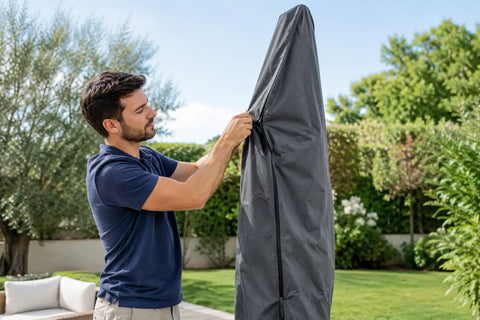
An effective cover must first match the actual dimensions of the furniture. Too small, it strains the corners and tears faster. Too large, it billows, catches the wind, and lets in more moisture. The ideal is a cover that covers well but isn't crushing, with proper support.
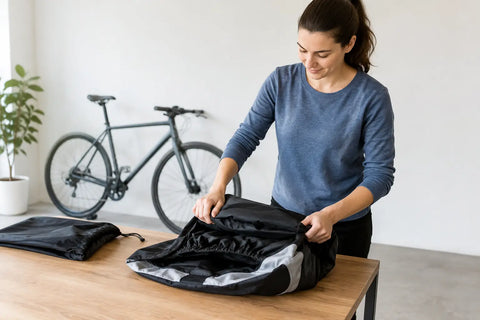
The material also matters. For winter, a water-resistant fabric is needed, capable of limiting infiltration while allowing some breathability. A completely waterproof cover without ventilation can trap condensation. Conversely, a too-light protection lets rain through and loses its purpose. The right balance is a cover designed for outdoor use, with a solid finish, clean seams, and a fastening system.
Fasteners, cords, or straps are often underestimated. Yet, in winter, they make a difference when the wind picks up. A well-secured cover stays in place, protects better, and wears out less quickly. For large pieces, this stability is essential.
Before covering, prepare the furniture
Placing a cover on dirty or wet furniture is a common mistake. Dust, moss, rain marks, or organic residues remain trapped for weeks. The result: odors, stains, mold, and sometimes damaged surfaces when the season restarts.
Start with a simple cleaning, adapted to the material. Wood requires gentle maintenance, metal should be checked for rust spots, and resin is easily cleaned with soapy water. Textiles must be perfectly dry before storage or covering.
Then, always let it dry completely. This waiting time seems insignificant, but it determines the quality of the protection. A cover placed too early keeps moisture inside. A cover placed on dry furniture truly fulfills its role.
Wood, metal, resin: the differences to know
Outdoor wood appreciates protection, but it should not be enclosed in poor conditions. If it remains damp under a poorly ventilated cover, it can blacken or stain. An adapted cover, placed on clean, dry furniture, remains a good solution, especially if the furniture is not directly in contact with damp ground.
Metal resists well, provided its finish is intact. On aluminum, the main risk is often more aesthetic than structural. On steel or iron, paint chips and exposed areas deserve special attention before winter. A cover limits exposure, but it does not replace a check of the general condition.
Resin and plastic often withstand bad weather better, which encourages leaving them unprotected. However, the combination of humidity, cold, and external deposits eventually wears them down visually. A cover helps keep furniture cleaner and more presentable in spring.
Common mistakes in winter outdoor furniture protection
The first mistake is to think that one solution fits all. A small urban balcony, a covered terrace, and an open garden do not require the same level of protection. You need to look at the actual exposure, not just the furniture's material.
The second mistake is to cover down to the ground without any air circulation. This seems more protective, but moisture can stagnate at the bottom, especially after rain or melted snow. It's better to have a well-placed cover, on furniture that is possibly slightly elevated, rather than a cocoon effect that keeps all the water around.
The third mistake is forgetting the cushions. Many people protect the structure and leave the seats in a poorly ventilated storage box or under a simple tarp. These are often the first elements to deteriorate.
Finally, waiting for the first major bad weather is never ideal. Protection put in place before the sustained cold sets in is more effective and requires less effort.
Should you cover all winter or check regularly?
Even with a good cover, occasional checks are still useful. After a period of wind, heavy snow, or repeated rain, it's best to take a look. Check that the cover is still securely fastened, that it hasn't filled with water in one spot, and that nothing is rubbing excessively on the corners.
This monitoring remains simple, but it prevents unpleasant surprises. A protective cover works best when it is part of regular maintenance. We're not talking about a chore, but rather a seasonal reflex that protects your furniture and your budget.
For many households, the most practical solution is to clean, dry, cover properly, and then check occasionally. This is precisely what makes a cover so useful: clear protection that is easy to implement and adapted to daily life.
At 1001 Housses, this logic is simple: better protection for greater longevity. If you choose a cover suited to the shape, size, and use of your furniture, you gain peace of mind throughout the winter. And when warm weather returns, you'll find furniture ready for use, instead of a cleaning and replacement project.