

What is spandex?
of reading

Spandex is a lightweight synthetic fiber that is used to make stretchable materials such as different types of covers, clothing, sheets, etc.
This fabric can stretch up to 5 to 8 times its normal size. In most cases, pure spandex is not used, but only small amounts of this fabric are woven into other synthetic, semi-synthetic, or organic fibers.
We appreciate Spandex for its soft touch, its ability to retain its appearance and varied colors, its silky and comfortable nature, and the fact that it doesn't wrinkle.
It is very important to note that it was created to have excellent resistance, even when wet or dry. It therefore resists damage longer, and over time, it does not lose its elasticity, which is very important. That's why we see it more and more in our homes.

1. What is spandex fabric?
A. Spandex composition
It is composed of a long-chain polymer called polyurethane, which is produced by reacting a polyester with a diisocyanate. The polymer is transformed into fiber using a dry spinning technique.
Contrary to popular belief, the term "spandex" is not a brand name, and this term is used to generally refer to fabrics made of polyether-polyurea copolymer that have been manufactured using various production processes. The terms spandex, Lycra, and elastane are synonymous.
It is important to know that a fabric will never be 100% Lycra, or that a Lycra fiber is never alone. In fact, a Spandex thread is always recovered with another fiber, such as nylon or polyester. Spandex is far too fragile to be used alone in a fabric.

The fabric we call Lycra is actually a knit made from a blend of Spandex and one or more fibers. It differs from other knits by its highly elastic fiber component, which can be up to 40%.
B. Is spandex a good fabric?
Using research on polyurethane, researchers created a new high-elasticity polymer fabric. During the development process, scientists called this fabric "spandex."
Once the fabric was completed, it was sold under the Lycra brand name, but consumers seemed to prefer calling this material spandex, and this term became part of the public lexicon to refer to this synthetic fabric.

Like other polymers, spandex is made from repetitive chains of monomers that are held together by an acid. From the beginning of the spandex development process, it was recognized that this material was very heat-resistant, meaning that notoriously heat-sensitive fabrics like nylon and polyester are improved when combined with spandex fabric.
The elasticity of elastane immediately made it desirable worldwide, and the popularity of this fabric persists to this day. It is present in so many types of clothing that practically every consumer owns at least one item containing elastane, and it is unlikely that the popularity of this fabric will diminish in the near future.
Unfortunately, elastane has a very negative environmental impact after its introduction to the consumer market.
C. The origins of Spandex
In the past, underwear and corsets were made of rubber. The results were expensive, difficult to work with, and could cause skin irritation. A team of scientists wanted to find a product that would replace this rubber.
The arrival of Spandex allowed clothing to adapt to all shapes with comfort and offered freedom of movement, all at a lower cost. For example, in the 1960s, Lycra revolutionized the swimwear industry. It allowed them to be much lighter, thinner, and most importantly, to dry faster.

In the 70s, the popularity of skinny jeans and leggings increased with the introduction of Spandex in this type of clothing. Today, Spandex is found in the majority of our clothes, and the Lycra brand continues to grow by developing other increasingly effective products.
2. How is spandex made?
Since spandex is a fully synthetic fiber, no organic components are used to make this material. Instead, all the constituent elements of this fiber are made in a laboratory and are then combined under specific stimuli to create the spandex fabric.
In the years following the invention of elastane, a number of different methods for manufacturing this fabric emerged. Some of these methods are more efficient than others, and over time, methods like reaction spinning, melt extrusion, and wet solution spinning have mostly been abandoned.
Nearly 95% of the world's spandex production is now done using a method called solution dry spinning, and it is this manufacturing process that we will examine in detail.

To begin the spandex fabric production process, a substance called macroglycol is mixed with a monomeric diisocyanate under specific heat and pressure. The temperature and pressure conditions must be exact to produce the desired results, and the macroglycol and monomeric diisocyanate must also be in an approximate ratio of 1:2.
If the proper conditions are applied, a substance called a prepolymer forms, and this substance is then used in the rest of the production process. Once formed, the prepolymer is exposed to diamine acid, and a chemical reaction called a chain extrusion reaction is initiated.
The resulting substance is very viscous and must be diluted with a solvent before it can proceed to the next step. When it is thin enough to work with, the prepolymer is loaded into a machine called a fiber production cell or cylindrical spinning cell.

Inside this machine is a device called a "spinneret," which has dozens of small holes. As the fiber production cell rotates, the prepolymer solution is forced through these holes, and it takes the form of fabric strands. However, these threads are still in a liquid state when they exit the spinneret, and they are then exposed to heated solvent gas and nitrogen to make them solid.
These solid fibers are then pushed out of the cylindrical spinning cell, and when exposed to compressed air, they form twisted strands. This compressed air can form strands of various sizes.
Finally, the spandex fiber is immersed in a finishing agent composed of magnesium stearate or a similar chemical. Once loaded onto a spool, it is ready to be woven into fabric.

3. How is spandex used?
A. Spandex usage
Given all the advantageous properties they offer, enriched Spandex fabrics are very popular. In fact, they make up a large part of ready-to-wear clothing.
When spandex fabric is added to cotton, for example, that fabric becomes much more elastic, and spandex can also be used to add elasticity to traditionally rigid fabrics like polyester.
Even if small amounts of this fabric are added to other textiles, the latter become much more stretchable; given that spandex can stretch up to eight times its original size, the elasticity conferred by adding this fabric to other textiles can be determined by dividing this stretch potential by the percentage in which it is included in a garment.

Spandex fabric can also be used in any consumer or industrial application where elasticity is desired. Since its creation, this type of fabric has become increasingly popular, and nowadays, it is present in thousands of different types of clothing, and it is used by consumers worldwide.
B. Where is spandex found?
Spandex is therefore found in both knitted and woven textiles, with a percentage varying between 2 and 40%. Its addition to the composition allows the fabric better elasticity, better hold, optimized comfort, and a lower level of wrinkling.
A good example is the popular skinny jean; it is even rare today to find a pair of jeans without elastic fibers in its composition.

As for Lycra knits, they are mostly used for anything that requires high stretch and good resistance: swimsuits or gymnastics outfits, sportswear, leggings, socks and tights, etc. Lycra mesh is generally available in a wide range of colors and patterns, prints, and textures.
The most common application of spandex is in form-fitting fabrics. For example, it is included in many types of men's and women's underwear, and even if it is not present in the main fabric of an undergarment, it is almost always present in the waistband. In fact, spandex fabric is present in the waistbands of almost all types of stretchy clothing.
Spandex is also used in relatively high percentages in cotton and wool socks. The use of this fabric in socks allows these garments to stay on your feet and also makes it easier to put socks on and take them off.
This fabric is very popular in sportswear. In most sports activities, it is important to wear clothes that stick to the skin, which is why spandex fabric is used in swimwear, cycling clothing, and types of clothing used in team sports.

Finally, spandex fabric is sometimes used in industrial applications. For example, it is used in the film industry to make motion capture suits, which are special types of suits that actors wear in front of green screens. Spandex facilitates the creation of realistic 3D characters by ensuring that these suits perfectly conform to the actors' bodies.
C. How to keep spandex in good condition
For a fabric with a low percentage of Spandex, we recommend simply maintaining it according to the main fiber. However, you should avoid machine drying it.

For a fabric with a high percentage of Spandex, such as Lycra knit:
- Machine wash in cold water.
- Do not use bleach, fabric softener, or grease.
- Do not tumble dry.
- If necessary, iron at low temperature without steam.
- Dry cleaning.
D. Where is spandex fabric made?
Spandex fabric is manufactured by many different international companies. Some of these companies, like DuPont, have factories in dozens of different countries, but others may be localized in a particular country.
The majority of spandex manufacturing plants worldwide are located in China. In the past, most of these fabrics were produced in the United States, but the reduction in labor costs has driven the manufacturing of many different types of textiles to China in recent decades.
A recent recovery in the American manufacturing economy could herald the return of spandex production to American shores, but either way, market reports predict a bright future for spandex production.

While many types of synthetic textiles have lost popularity in recent years, there is no substitute for spandex, which means that this fabric industry will continue to benefit from increased growth until at least 2023.
4. Spandex characteristics
A. Different types of spandex
Even when different production methods are used to make spandex, the end result is chemically the same. However, some confusion can arise due to the different terms used to describe this fabric:
- Spandex: This term is not a registered trademark and is, in fact, an anagram of "expands." Spandex was never intended to be the primary term used to refer to elastane fabric, but the term stuck in the consumer's mind, and most Americans and Canadians now refer to this textile by this term.
- Elastane: Most Europeans use variations of the term "elastane" to refer to this type of fabric. Elastane is the most chemically correct way to refer to this fabric.
- Lycra: This term is a registered trademark of DuPont Corporation. Only spandex manufactured by DuPont can be called Lycra, but this fabric is chemically identical to fabrics called spandex or elastane, and it has the same attributes.

B. How much does spandex manufacturing cost?
Due to its novelty and the relatively laborious manufacturing process used to produce it, spandex fabric has a relatively high market price. It is, for example, more expensive than polyester and nylon, and it is also generally more expensive than organic fabrics like wool and cotton.
However, since elastane is usually only used in small quantities in clothing, this price increase is generally not noticeable at the consumer level. However, the more elastane fabric a garment contains, the more expensive it is. For example, certain types of cycling equipment and professional dancewear that contain high levels of spandex are quite costly.

C. Spandex Environmental Impact
Overall, spandex has a negative impact on the environment. This impact is not as pronounced as that of other types of synthetic fabrics, but it is certainly present, and to date, no feasible solution has been proposed to curb the environmental degradation caused by spandex fabric.
Considering only the production methods used to make spandex, this fabric does not appear to have a significant detrimental effect on the environment. Some synthetic materials, like nylon, are directly derived from non-renewable resources like coal and petroleum, but spandex is entirely made from chemicals synthesized in a laboratory.

Spandex production is therefore very energy-intensive, but if renewable energy sources are used to produce the prepolymers from which this fabric is made, this problem can be solved. It is possible that the same health problems encountered by workers in polyurethane production are encountered in spandex production, but no research has been done on this subject.
Furthermore, it is possible that isocyanates, which are toxic chemicals commonly found in polyurethane, are also present in spandex, but there is no clear indication that this is the case.
The notable environmental impact of spandex only occurs after it is sold to consumers. It has been determined that 60% of the waste present in American waterways is composed of non-biodegradable textile fibers, and spandex clothing and fibers account for a large part of this waste.

Even if spandex is disposed of properly in landfills or other designated waste disposal areas, tiny fibers of this substance are introduced into waterways every time spandex garments are washed, harming aquatic life, reducing drinking water quality, and ultimately contributing to the gigantic islands of waste that regularly accumulate in the world's oceans.
Spandex and other non-biodegradable textiles will be present long after human civilization has left the planet, and currently, there is no known method to convert spandex fabrics and similar materials into biodegradable substances. Safe disposal and limited washing are the only ways to mitigate the environmental impact of this fabric.
5. Our spandex products!
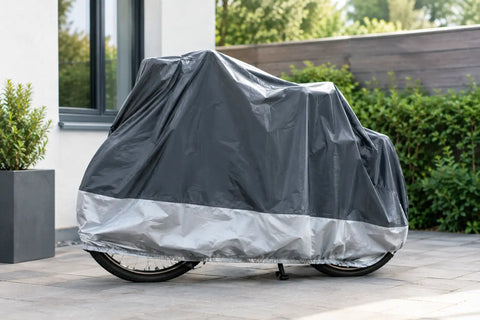
You've been won over by spandex fabric and want to try it out. We offer a wide range of protective covers made with this type of stretchy fabric.
It's very practical to use, especially for chair covers. Easy to put on, protects your chairs, easy to wash, stretchy,...
In fact, whether it's for bicycle covers, armchair covers,... You'll find a percentage of spandex that will make your cover stretchy and easy to put on.