

How to protect a barbecue from the rain
of reading
A barbecue left out in the rain can age much faster than expected. If you're wondering how to protect a barbecue from the rain, the right answer isn't just to cover it at the last minute. It's especially important to prevent moisture from getting trapped, rust from setting in, and fragile parts from deteriorating between uses.
Rain isn't always an immediate problem. However, the sequence of rain, condensation, sun, and improper storage quickly wears out the bowl, burners, grill, and even the wheels. A well-protected barbecue stays cleaner, heats better, and lasts longer. This is exactly the kind of simple maintenance that prevents premature replacement.
How to protect a barbecue from rain without making mistakes
The most common reflex is to put on a cover as soon as the sky clouds over. This is useful, but not enough if the barbecue is still hot, greasy, or wet. A protective cover works well when it protects a clean and dry appliance. Otherwise, it can trap moisture instead of repelling it.
So, the right approach begins after each use. Let the barbecue cool completely, remove the most visible food residues, empty the ashes if you're using a charcoal model, then ensure everything is thoroughly dry. This preparation time makes a real difference to the equipment's lifespan.
Then, choose protection that fits its shape. A cover that's too tight will rub against the corners and wear out faster. A cover that's too loose will let air, and sometimes rain, pass through the sides. The ideal is a cover designed to cover the barbecue without crushing it, made from a water-resistant material and with a good fit in windy conditions.
The cover remains the simplest solution
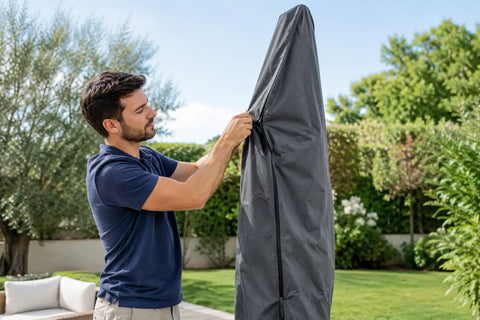
For most households, the cover is the most practical solution. It protects against rain, but also against dust, pollen, bird droppings, and wet leaves that accumulate on the lid. It's a simple, quick-to-install protection and much more effective than a simple sheet or improvised tarp.
Not all protections are equal. A good barbecue cover should cover the top, sides, and, if possible, extend low enough to limit water splashes. A material that's too thin risks tearing after a few weeks, especially if the barbecue remains outdoors all year. A material that's too airtight can also promote condensation if not well designed.
Therefore, a balance must be struck. A water-resistant cover, thick enough to last, but designed for real outdoor use, is often the best choice. For a high-end or frequently used barbecue, investing in a suitable cover is usually much cheaper than replacing rusty parts.
Location matters almost as much as the cover
Even with a very good cover, a poorly placed barbecue will suffer more from the rain. If it's located in a hollow of the garden, against a dripping wall, or on a surface where water stagnates, it will be exposed to moisture for longer. Conversely, a slightly sheltered location significantly reduces the risks.
The best thing to do is to park the barbecue on a well-drained patio, under an awning, an open pergola, or near a covered but ventilated area. Avoid completely enclosed spaces if the barbecue is not perfectly clean and dry, especially after use. The goal is not only to shelter it from direct rain, but also to limit persistent humidity.
If you don't have any shelter, slightly raising the wheels or feet can help when the ground stays wet for a long time. This prevents water from rising from below and certain metal parts from remaining in contact with a damp area for days.
Protecting according to the type of barbecue
Not all barbecues react to rain in the same way. A charcoal model is often mechanically simpler, but ashes absorb moisture very poorly. If they remain in the bowl after a downpour, they form a corrosive substance that accelerates degradation. Therefore, the tray or bowl must be emptied regularly before putting the cover back on.
A gas barbecue requires a little more attention. The burners, fittings, and control knobs do not appreciate repeated exposure to water. A well-fitted cover is particularly useful here. After a rainy spell, it is advisable to check that nothing has absorbed moisture before the next ignition.
For an outdoor electric barbecue, even greater caution is required. Even if some models are designed to withstand patio use, electrical parts and connections should never remain exposed. Serious protection and storage in a dry place remain the best options when possible.
After the rain, it's also important to adopt the right habits
Protecting a barbecue from the rain doesn't stop when the water falls. What you do immediately afterward matters a lot. If the cover has absorbed water on its surface, remove it when the weather clears and let the barbecue breathe for a while. This helps to evacuate residual moisture and limits condensation.
Take the opportunity to check sensitive areas. Look under the lid, around the handles, at the hinges, and near the wheels. These are often the first places where oxidation appears. A quick wipe with a clean cloth is sometimes enough to prevent deterioration that would become visible a few weeks later.
If you see traces of light rust, it's better to act early. A small superficial area is easier to treat than established corrosion. Again, regularity is more effective than occasional deep cleaning.
What to absolutely avoid
The first trap is covering a barbecue that is still warm. The heat trapped under the cover creates condensation, especially if the outside air is cool or humid. The second is forgetting basic cleaning. Grease, food residues, and humidity form a trio that is not very compatible with durability.
Another common mistake is using an unsuitable plastic tarp. On paper, it protects from water. In practice, it moves in the wind, sometimes retains moisture, and does not resist well over time. A real protective cover provides a cleaner, more durable, and more reassuring result in everyday life.
You should also avoid leaving the barbecue exposed all winter without checking it. Even when well covered, an appliance forgotten for several months can develop mold, rust, or seized parts. A simple regular check prevents many surprises when the good weather returns.
Should you bring your barbecue indoors?
If you have a garage, a dry shed, or a ventilated storage space, yes, it's often a very good idea, especially in cold weather or during long periods of rain. This reduces direct exposure to bad weather and further extends the life of the barbecue.
That said, not everyone has this option. In this case, a good cover, a judicious location, and a few maintenance habits are already enough to achieve serious protection. It's not about making the barbecue untouchable, but about limiting unnecessary wear and tear.
At 1001 Housses, this logic is simple: it's better to protect equipment properly than to have to replace it too soon. For a barbecue, the right cover is not a secondary accessory. It is often the most direct solution to keep an appliance clean, ready to use, and visually in good condition for longer.
How to protect a barbecue from rain in the long term
Over time, the best method relies on a very simple routine. After use, let it cool, clean the essentials, dry if necessary, then put the cover back on. When heavy rain is announced, check that the barbecue is well placed and that the cover is holding correctly.
It's not complicated, but it's what makes the difference between a barbecue that goes through several seasons without problems and a model that deteriorates quickly. Rain is not necessarily the enemy. The moisture that sets in, however, is much more so.
If you want to keep your barbecue in good condition without constantly thinking about it, opt for suitable protection and regular gestures. A few minutes of attention after each use are well worth the repairs, rust, and frustration of a damaged appliance when you simply wanted to cook outdoors.